Michigan’s fall hunting seasons begin in September, offering opportunities for waterfowl, squirrel, and rabbit hunting – promising a great season for all hunters!
Michigan presents exceptional opportunities for waterfowl hunters, with diverse landscapes supporting abundant populations of ducks and geese. The state’s hunting seasons are eagerly anticipated, often kicking off over Labor Day weekend with early goose and teal seasons.
Successful hunting requires understanding regulations, obtaining necessary licenses, and scouting prime locations; Michigan’s Department of Natural Resources (DNR) provides comprehensive resources for hunters, ensuring both a rewarding and safe experience.
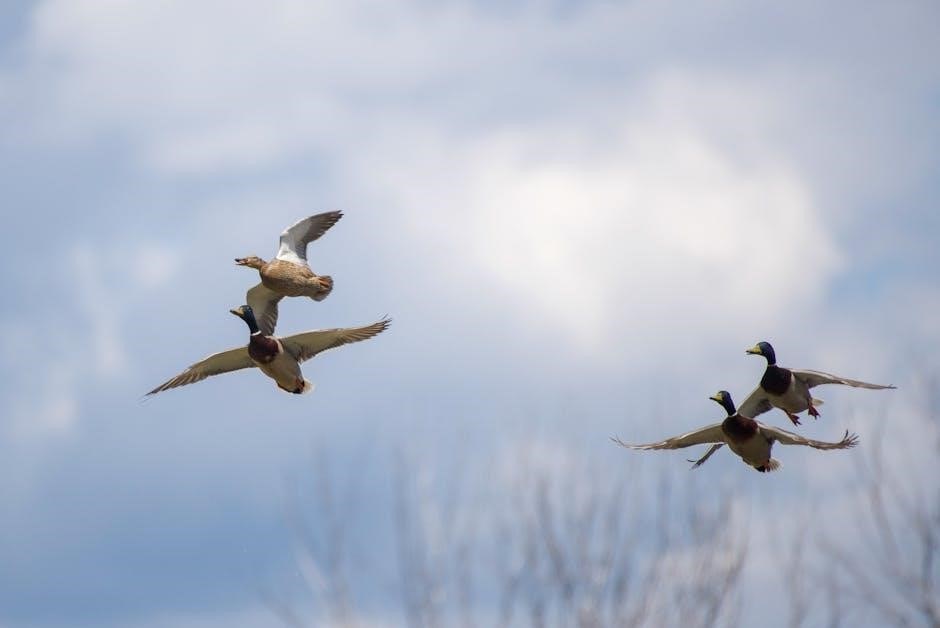
Recent legislative action designated the wood duck as the official state duck, highlighting Michigan’s commitment to waterfowl conservation and the traditions surrounding this popular sport.
Understanding Michigan’s Waterfowl Species
Michigan boasts a rich diversity of waterfowl, attracting hunters seeking various species. Identifying ducks and geese is crucial for legal and ethical harvesting. Common ducks include teal, mallards, and wood ducks – now the official state duck! Geese hunters often target Canada geese, along with snow and blue geese.
Understanding species-specific behaviors, migration patterns, and preferred habitats enhances hunting success. Recognizing subtle differences in plumage and calls aids in accurate identification in the field. Familiarity with these details contributes to responsible wildlife management and a fulfilling hunting experience.
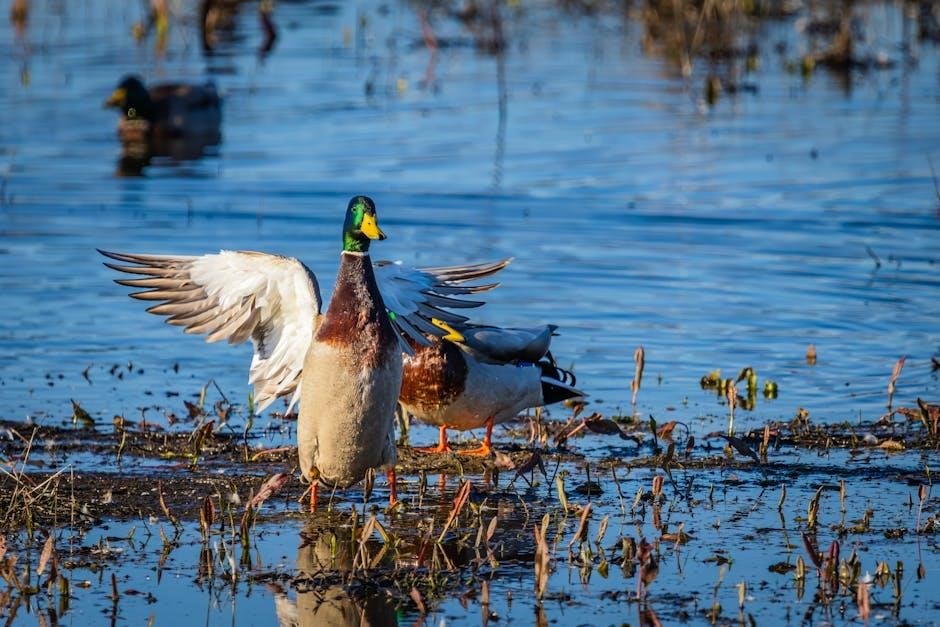
Ducks Commonly Hunted in Michigan
Michigan hunters frequently pursue teal during early seasons, capitalizing on their September opening. Mallards, the most abundant duck, provide consistent action throughout the regular season. The recently designated official state duck, the wood duck, is prized for its beauty and delicious meat, often found in forested wetlands.
Other popular species include pintails, wigeon, and ring-necked ducks. Successful duck hunting requires understanding each species’ feeding and loafing habits. Hunters must accurately identify ducks to adhere to bag limits and species restrictions, ensuring sustainable harvests.
Geese Commonly Hunted in Michigan
Canada geese are the most abundant goose species in Michigan, offering plentiful hunting opportunities, particularly during early September seasons. These geese often frequent agricultural fields and open water areas. Snow geese, known for their large flocks and dynamic flights, provide exciting hunts, often requiring aggressive calling and decoy spreads.
Lesser Canada geese and white-fronted geese are also present, though in smaller numbers. Successful goose hunting demands knowledge of migration patterns and preferred feeding locations. Hunters must be proficient in goose calls and adept at setting realistic decoy patterns.
Michigan Waterfowl Hunting Seasons & Regulations
Michigan’s waterfowl seasons are carefully structured to balance hunter opportunity with conservation goals. Early goose and teal seasons typically open around Labor Day weekend – specifically, September 1st – providing initial hunting chances. Regular duck seasons are zone-specific, with dates varying across the state to align with migration patterns.
Hunters must consult the Michigan DNR’s annual waterfowl hunting digest for precise dates and zone boundaries. Regulations detail bag limits, species restrictions, and shooting hours. Staying informed about these rules is crucial for legal and ethical hunting practices.
Early Waterfowl Seasons – September Dates
Michigan’s early waterfowl seasons kick off with the Labor Day weekend, offering a first glimpse into the fall hunting opportunities. Typically, early goose hunting and teal seasons open on September 1st, providing dedicated hunting periods for these species before the broader duck seasons begin.
These early seasons are designed to take advantage of resident goose populations and early-migrating teal. Hunters should consult the official Michigan DNR regulations for specific zone details, bag limits, and any associated restrictions applicable to these September hunts. Preparation is key for a successful start!
Regular Waterfowl Seasons – Zone Specific Dates
Michigan divides its regular waterfowl seasons into zones to account for varying migration patterns across the state. Dates differ based on these zones, typically encompassing September through December, with specific opening and closing days determined annually by the Michigan DNR.
Hunters must carefully review the zone map and corresponding dates published in the official waterfowl hunting regulations. These regulations detail the specific dates for duck, goose, and other waterfowl species within each zone. Understanding these zone-specific dates is crucial for legal and ethical hunting practices throughout the season.
Bag Limits and Species Restrictions
Michigan waterfowl hunting is governed by strict bag limits and species restrictions designed to ensure sustainable populations. Daily bag limits specify the maximum number of birds a hunter can harvest per day, varying by species. These limits often differ between ducks and geese, and may have sub-limits for specific duck species.
Hunters must consult the annual waterfowl hunting regulations for precise details. Restrictions may also apply to certain species, such as light geese, or during specific portions of the season. Adhering to these regulations is vital for conservation and avoiding penalties.
Essential Hunting Licenses and Permits
To participate in Michigan waterfowl hunting, several licenses and permits are essential. A Michigan hunting license is the foundational requirement for all hunters aged 17 and older. Additionally, a waterfowl stamp is mandatory, validating the right to hunt ducks and geese. Hunters pursuing migratory birds must also possess a valid Michigan Migratory Bird Stamp.
Furthermore, a HIP (Harvest Information Program) registration is required annually, providing data for waterfowl management. Specific areas may necessitate additional permits or access passes. Always verify current licensing requirements with the Michigan DNR before hunting.
Top Waterfowl Hunting Locations in Michigan
Michigan boasts diverse waterfowl hunting grounds. Southern Michigan offers opportunities around managed wetlands and agricultural fields, attracting ducks and geese during migration. Key areas include the Shiawassee National Wildlife Refuge and Pointe Mouillee State Game Area. Northern Michigan presents unique challenges and rewards, with hunting focused on inland lakes and coastal marshes.
Locations like the Seney National Wildlife Refuge and areas near the Great Lakes provide excellent goose and duck hunting. Scouting is crucial, as bird concentrations shift with weather patterns and food availability throughout the season.
Southern Michigan Hunting Areas
Southern Michigan provides accessible and productive waterfowl hunting, particularly during peak migration. The Shiawassee National Wildlife Refuge stands out, offering diverse habitats for ducks and geese. Pointe Mouillee State Game Area, along Lake Erie, is another premier location, known for its large concentrations of waterfowl.
Agricultural fields, flooded timber, and managed wetlands throughout the region attract birds. Hunters should focus on areas near major flyways and scout diligently for current feeding and resting locations. Public land opportunities are plentiful, but competition can be high.
Northern Michigan Hunting Areas
Northern Michigan presents a unique waterfowl hunting experience, characterized by expansive forests, numerous inland lakes, and the Great Lakes shoreline. The region attracts significant numbers of migrating ducks and geese, particularly later in the season;
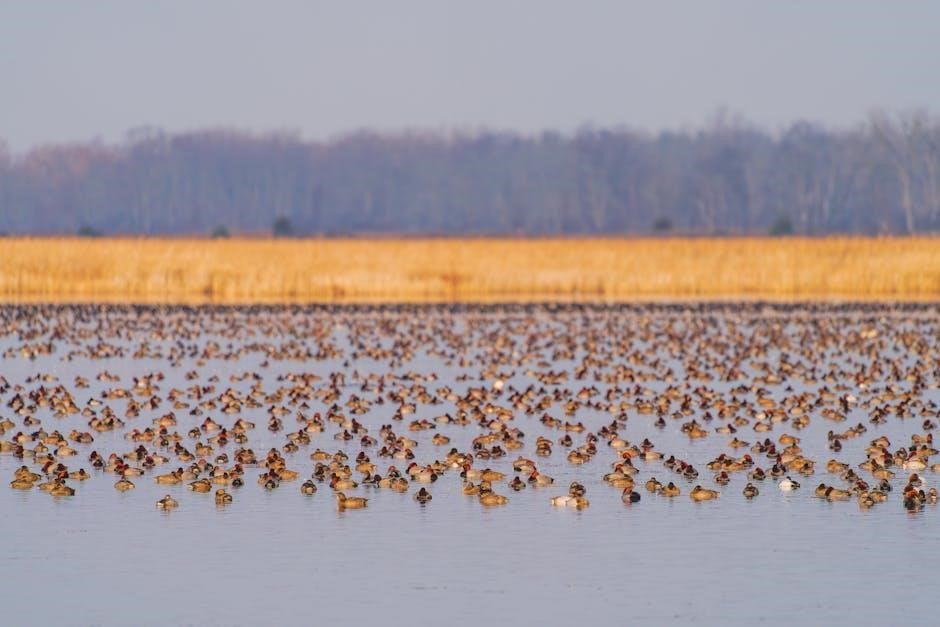
Hunters often find success near agricultural fields bordering wetlands and along major river systems. Areas around the Au Sable River and the Manistee River are popular choices. Public land access is available through state game areas and national forests, requiring thorough scouting to locate productive hunting spots. Be prepared for varied terrain and weather conditions.
Waterfowl Hunting Techniques
Successful waterfowl hunting in Michigan demands adaptable techniques. Duck hunting often involves utilizing concealed blinds near feeding or resting areas, employing a variety of decoys to mimic natural flocks, and mastering calls to lure birds within range. Strategic placement is key, considering wind direction and flight paths.
Goose hunting frequently relies on larger spreads of decoys, mimicking feeding or loafing geese in open fields. Aggressive calling and effective concealment are crucial. Understanding goose behavior – their feeding habits and preferred roosting sites – significantly increases hunting success. Scouting is paramount for both ducks and geese.
Duck Hunting Strategies
Effective duck hunting in Michigan centers around concealment and realistic decoy setups. Utilize blinds – natural vegetation or constructed layouts – to remain hidden from approaching birds. Decoy spreads should mimic natural flocking behavior, considering wind direction and water currents. Vary decoy types (mallards, teal, pintails) based on local populations.
Mastering duck calls is vital; learn different calls for greeting, feeding, and distress. Patience is key, as ducks often circle before committing to a landing. Be prepared for quick shots and practice ethical shooting. Scouting reveals preferred feeding and resting locations, improving success rates.
Goose Hunting Strategies
Successful goose hunting in Michigan demands a different approach than duck hunting. Geese are wary and require extensive concealment – layout blinds are highly recommended. Large, realistic decoy spreads are crucial, mimicking feeding or resting flocks in open fields or along shorelines.
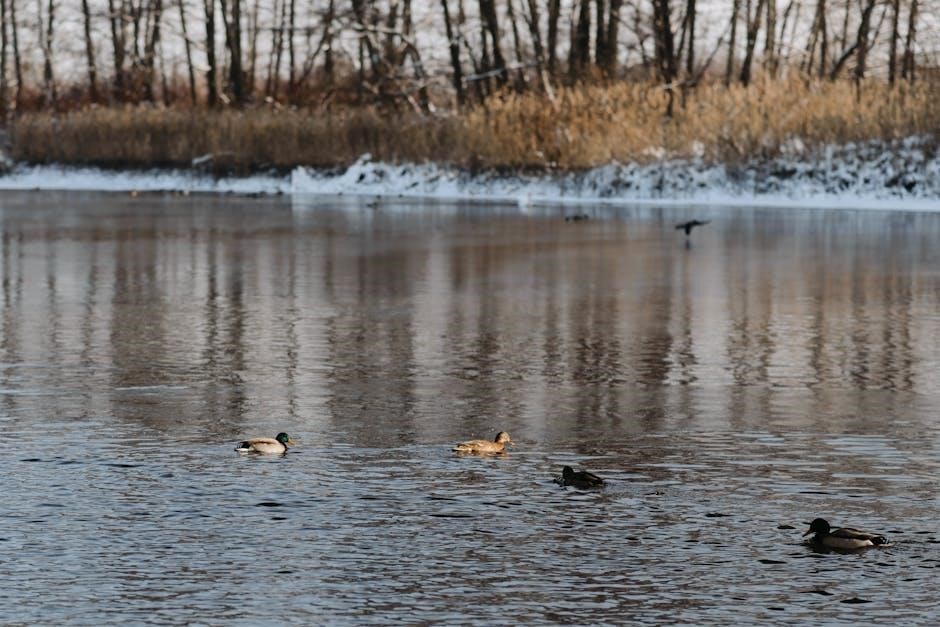
Goose calls are essential, focusing on honks, moans, and clucks to attract attention. Understanding goose flight patterns and staging areas through scouting is paramount. Be prepared for long-range shots and utilize decoys to direct birds within effective range. Patience and adaptability are key to outsmarting these intelligent birds.
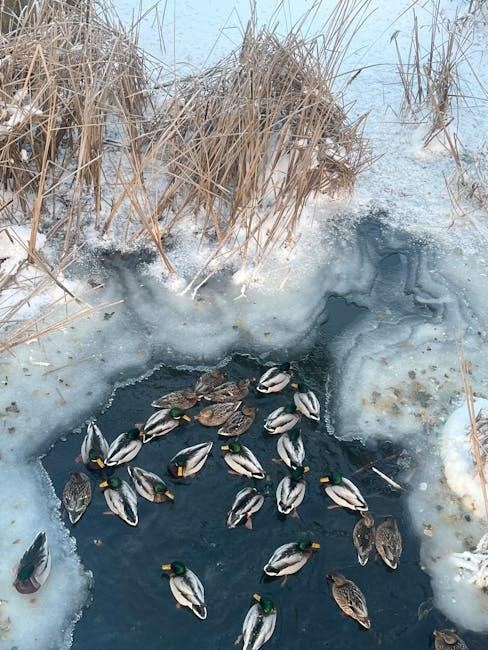
Essential Gear for Michigan Waterfowl Hunting
Michigan waterfowl hunting necessitates reliable equipment for success and safety. A 12- or 20-gauge shotgun, appropriately choked for the intended range, is fundamental; Non-toxic shot is legally required for all waterfowl hunting. Durable, waterproof clothing is vital, alongside waders or boots suited for marshy conditions.
Decoys – both ducks and geese – are crucial for attracting birds, alongside a variety of calls to mimic their sounds. Don’t forget essential accessories like a hunting knife, game bag, and binoculars. A dog trained for retrieving can significantly enhance your hunt, and a comfortable blind completes the setup.
Shotguns and Ammunition
Selecting the right shotgun is paramount for Michigan waterfowl hunting. A 12-gauge is popular for its versatility and power, while a 20-gauge offers lighter recoil, suitable for newer hunters. Consider choke selection; modified or improved cylinder chokes work well for ducks, while tighter chokes suit geese.
Crucially, non-toxic shot is legally mandated for all waterfowl hunting in Michigan. Steel, bismuth, or tungsten are acceptable alternatives to lead. Ammunition choice depends on the species and range; heavier loads are effective on larger geese at longer distances. Always verify ammunition legality before each hunt.
Decoys and Calls
Decoys are essential for attracting waterfowl within shooting range in Michigan. Mallard decoys are versatile for duck hunting, while Canada goose decoys are crucial for goose hunts. Consider using a mix of full-body, shell, and sock decoys to create a realistic spread. Proper decoy placement, accounting for wind direction, is key.
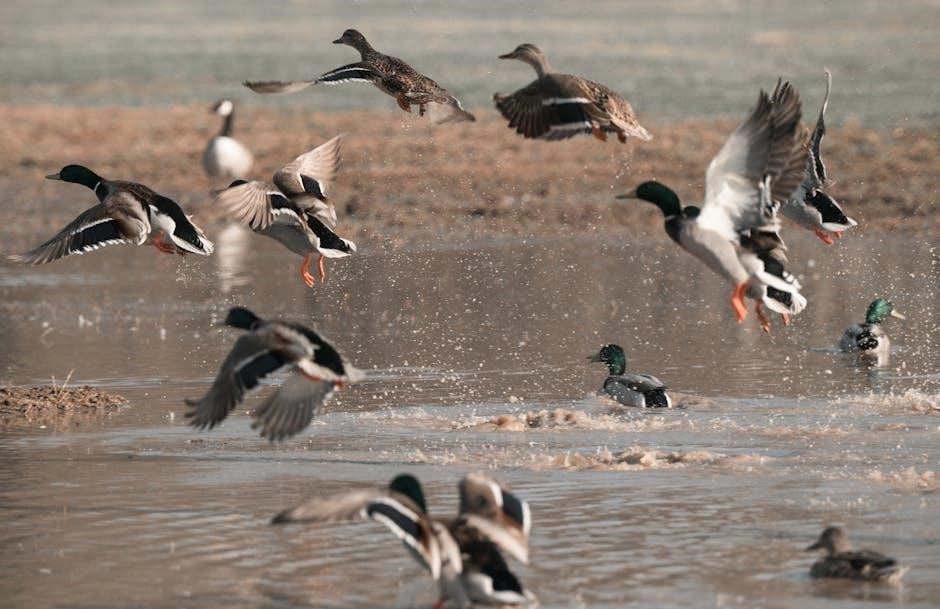
Waterfowl calls mimic the sounds of ducks and geese, further enticing birds. Mastering basic calls like quacks, honks, and whistles can significantly improve your success. Electronic calls are permitted but check regulations. Practice consistently to develop realistic and effective calling techniques.
Waterfowl Hunting Safety in Michigan
Prioritize safety during Michigan waterfowl hunts. Always practice safe firearm handling, treating every gun as loaded. Wear hunter orange clothing for visibility, especially in wooded areas. Be mindful of your surroundings and identify potential hazards like water, terrain, and other hunters.
Boating safety is crucial when hunting from water. Wear a life jacket at all times, and be aware of weather conditions. Never consume alcohol while operating a boat. Communicate your hunting location and expected return time to someone reliable. Proper training and awareness are paramount for a safe hunt.
Scouting for Waterfowl in Michigan
Effective scouting is key to successful Michigan waterfowl hunting. Identify areas with abundant food sources like agricultural fields and natural wetlands. Look for signs of waterfowl activity – tracks, droppings, and feathers. Observe flight patterns to determine preferred roosting and feeding locations.
Utilize maps and aerial imagery to locate potential hunting spots. Consider wind direction and set up your decoys accordingly. Scouting should be an ongoing process throughout the season, as waterfowl movements can change. Patience and observation will significantly increase your chances of a rewarding hunt.
Legal Considerations and Ethics
Michigan waterfowl hunting demands strict adherence to regulations. Hunters must possess valid licenses and permits, and understand bag limits and species restrictions. Always consult the Michigan DNR resources for the most current rules and season dates.
Ethical hunting practices are paramount. Fair chase, responsible shooting, and proper handling of harvested birds are essential. Respect private property and obtain necessary permissions. Practice safe gun handling and be mindful of other hunters and the environment. Promote conservation and sustainable hunting for future generations.
Field Care and Processing Waterfowl
Proper field care is crucial for preserving waterfowl meat quality. Immediately cool harvested birds by removing entrails and placing them in a game bag or cooler with ice. Avoid puncturing internal organs during retrieval. Transport birds promptly to prevent spoilage.
Processing involves plucking or skinning, and thorough cleaning. Rinse the cavity with clean water and remove any remaining feathers or debris. Consider brining or marinating for enhanced flavor. Follow safe food handling practices during all stages of processing to ensure a wholesome and enjoyable meal.
Michigan DNR Resources for Waterfowl Hunters
The Michigan Department of Natural Resources (DNR) provides extensive resources for waterfowl hunters. Their website (michigan.gov/dnr) offers detailed information on seasons, regulations, bag limits, and hunting maps. Hunters can access online licensing and permit applications, simplifying the process.
Furthermore, the DNR publishes hunting digests and guides, available both online and in print, outlining essential rules and safety guidelines. Educational programs and workshops are also offered, promoting responsible hunting practices and conservation efforts. Stay updated with the latest DNR announcements for any seasonal adjustments or important notices.
Impact of Wood Duck Designation
With Governor Whitmer’s recent signature, the wood duck is now Michigan’s official state duck. This designation elevates the profile of this beautiful and ecologically important waterfowl species, fostering greater awareness and appreciation among citizens.
While primarily symbolic, the designation can positively influence conservation efforts focused on wood duck habitats. It may also encourage increased participation in waterfowl hunting, as hunters develop a stronger connection to the species. The wood duck’s recognition highlights Michigan’s rich biodiversity and commitment to wildlife management, potentially boosting tourism and outdoor recreation.
Alternatives to Slack for Team Communication
For hunting teams seeking alternatives to Slack, several options exist, particularly those prioritizing domestic server stability and localized features. BearyChat emerges as a strong contender, mirroring Slack’s functionality while offering smoother performance within China, a benefit for teams experiencing latency issues.
Enterprise WeChat, developed by Tencent, is another popular choice, providing comprehensive team collaboration tools including real-time communication, file sharing, and scheduling. Its focused design and ease of registration distinguish it. Choosing the right platform depends on specific needs, considering factors like integration requirements and user familiarity.
BearyChat
Initially adopted by a group of 400+ programmers seeking a Slack alternative, BearyChat quickly gained traction due to its robust feature set and improved performance within China. It replicates Slack’s core functionalities – chat, file integration, and search – while boasting a domestic server infrastructure for enhanced speed and reliability.
BearyChat.com offers a localized experience, addressing the stability concerns often associated with international platforms. This makes it a practical solution for teams requiring seamless communication and efficient collaboration, particularly those facing challenges with accessing or utilizing Slack’s services effectively.
Enterprise WeChat
Developed by Tencent, Enterprise WeChat has become a popular team collaboration tool within China, offering a comprehensive suite of features tailored to domestic user needs. It facilitates real-time communication, secure file sharing, and streamlined scheduling, catering to diverse team requirements.
Compared to Slack, Enterprise WeChat provides a more targeted approach, deeply integrated with the Chinese digital ecosystem. Its simplified registration process, contrasting with platforms like ChatGPT, further enhances user accessibility. It’s a strong contender for teams prioritizing localized functionality and ease of use.
Future of Waterfowl Hunting in Michigan
Michigan’s waterfowl hunting future hinges on continued conservation efforts and adapting to evolving environmental factors. The recent designation of the wood duck as the official state duck signifies a commitment to protecting these vital species and their habitats.
Maintaining healthy waterfowl populations requires ongoing monitoring of breeding grounds, migration patterns, and harvest data; Collaboration between the Michigan DNR, hunters, and conservation organizations will be crucial. Addressing challenges like habitat loss and climate change will ensure sustainable hunting opportunities for generations to come.