Article Plan: Two-Digit by One-Digit Multiplication Worksheets Anchor Chart PDF
This article details utilizing anchor charts and worksheets for mastering two-digit by one-digit multiplication, aligning with standards like CCSS 4․NBT․6, offering free PDF downloads and interactive options․
Two-digit by one-digit multiplication represents a crucial stepping stone in a student’s mathematical journey, building upon foundational skills and preparing them for more complex operations․ This skill involves multiplying a number with two digits (like 23, 45, or 91) by a single-digit number (like 3, 7, or 5)․
Successfully grasping this concept requires a solid understanding of place value, the distributive property, and the multiplication process itself․ Often, students initially encounter challenges with aligning digits and managing regrouping (carrying over)․ Therefore, visual aids and structured approaches are incredibly beneficial․
This is where anchor charts and targeted worksheets become invaluable tools․ They provide a clear, concise visual representation of the steps involved, reinforcing learning and promoting independence․ The combination of a well-designed anchor chart and practice worksheets, often available as convenient PDF resources, can significantly enhance a student’s comprehension and confidence in tackling these multiplication problems․
What is an Anchor Chart?

An anchor chart is a visually displayed tool used in classrooms to support learning․ It’s essentially a large-format poster that summarizes key concepts, skills, or strategies related to a specific topic – in this case, two-digit by one-digit multiplication․ Unlike traditional posters that simply state information, anchor charts are often co-created with students, making the learning process more engaging and memorable․
These charts aren’t meant to be introduced at the beginning of a lesson, but rather during or after, as a way to capture and organize thinking․ They serve as a reference point for students during independent practice or problem-solving․ A good anchor chart is clear, concise, and visually appealing, utilizing color-coding, diagrams, and key vocabulary․
For multiplication, an anchor chart might illustrate the steps of the standard algorithm, the area model, or the partial products method․ Many teachers now utilize PDF versions for easy printing and distribution, even offering interactive digital versions․
Benefits of Using Anchor Charts for Multiplication
Anchor charts offer significant benefits when teaching multiplication, particularly two-digit by one-digit problems․ They provide a constant visual reminder of the steps involved, reducing cognitive load and promoting independence․ Students can refer to the chart during practice, fostering self-reliance and reducing reliance on the teacher․
The collaborative creation of anchor charts enhances student understanding and ownership of the material․ Visual learners especially benefit from the diagrams and color-coding often incorporated․ PDF anchor charts allow for easy access – printed mini-versions can be kept in student notebooks as personal references․
Furthermore, anchor charts support differentiation․ Teachers can point students to specific sections of the chart based on their individual needs․ They also serve as a valuable assessment tool, revealing areas where students may still be struggling․ Ultimately, they create a more supportive and effective learning environment․
Why Focus on Two-Digit by One-Digit Multiplication?

Two-digit by one-digit multiplication serves as a crucial stepping stone in developing fluency with multi-digit multiplication․ It bridges the gap between single-digit facts and more complex operations, solidifying understanding of place value and the distributive property․ Mastering this skill builds a strong foundation for future mathematical concepts․
This type of problem allows students to practice the standard algorithm without the overwhelming complexity of multiplying larger numbers․ Worksheets and anchor charts specifically designed for this skill provide targeted practice and visual support․ Focusing on this skill allows teachers to address common misconceptions before they become ingrained․
Successfully tackling two-digit by one-digit multiplication boosts student confidence and encourages a positive attitude towards math․ It’s a manageable challenge that yields significant gains in computational skills, preparing them for more advanced multiplication strategies․
Key Concepts & Skills
Essential concepts underpinning two-digit by one-digit multiplication include a firm grasp of place value – understanding tens and ones – and a strong recall of single-digit multiplication facts․ Students must also comprehend the distributive property, recognizing how to break down the two-digit number for easier calculation․
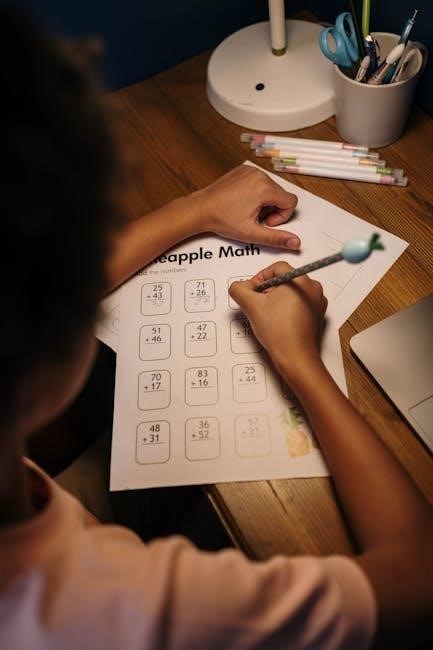
Key skills involve accurately applying the standard algorithm, including regrouping (carrying over) when necessary․ Anchor charts visually reinforce these steps․ Students need to be able to accurately multiply the one-digit number by both the tens and ones places of the two-digit number, then add the partial products․
Worksheets provide practice in applying these skills․ Furthermore, understanding how to represent multiplication using models like area models and base-ten blocks is crucial for conceptual understanding․ These skills are foundational for more complex multiplication and division problems․
Understanding Place Value in Multiplication
A robust understanding of place value is paramount for success with two-digit by one-digit multiplication․ Students must recognize that a two-digit number, like 35, isn’t just “thirty-five” but represents 30 and 5 – three tens and five ones․ This decomposition is critical when applying the distributive property of multiplication․
Anchor charts should visually emphasize this concept, perhaps by color-coding the tens and ones places․ When multiplying 35 by 4, students need to understand they are effectively calculating (4 x 30) + (4 x 5)․ Worksheets can reinforce this by presenting problems requiring students to explicitly break down the two-digit number before multiplying․
Without this place value foundation, students may struggle with regrouping and accurately calculating partial products․ Visual aids, like base-ten blocks, further solidify this understanding, demonstrating the quantity each digit represents․
The Standard Algorithm for Two-Digit by One-Digit Multiplication
The standard algorithm is a core skill in multiplication, and anchor charts should clearly illustrate each step․ Begin with aligning the numbers vertically, emphasizing the importance of the ones and tens columns․ Students then multiply the one-digit number by the ones place of the two-digit number, recording the product․
Next, they multiply the one-digit number by the tens place, again recording the product – crucially, reminding students to add a zero as a placeholder to represent the tens․ Finally, they add the two products together to arrive at the final answer․
Worksheets should provide ample practice with this algorithm, starting with problems without regrouping and gradually increasing complexity․ Anchor charts can visually demonstrate regrouping, showing how to carry over values to the tens column․ Consistent practice and clear visual guides are key to mastering this method․
Breaking Down the Multiplication Process
Deconstructing two-digit by one-digit multiplication into smaller steps is crucial for student understanding․ Anchor charts should visually represent this breakdown, showcasing how multiplication is essentially repeated addition․ For example, 13 x 4 can be shown as 10 x 4 + 3 x 4․
Worksheets can reinforce this concept by initially presenting problems as expanded forms, then transitioning to the standard algorithm․ This gradual approach helps students grasp the underlying logic․ Emphasize that multiplying by the tens digit is equivalent to multiplying by ten and then by the original digit․
Interactive anchor charts can allow students to physically manipulate numbers, demonstrating how the expanded form relates to the final product․ This process builds a strong conceptual foundation, making the algorithm more meaningful and less rote․
Visual Representations & Models
Employing visual models is paramount for solidifying understanding of two-digit by one-digit multiplication․ Anchor charts should prominently feature these models, offering students multiple entry points to the concept․ The area model is particularly effective, visually breaking down the multiplication into partial products representing areas of a rectangle․

Base-ten blocks provide a concrete representation, allowing students to physically manipulate units and tens to model the multiplication process․ Worksheets can incorporate spaces for students to draw their own area models or base-ten block representations alongside the numerical calculations․
These visual aids cater to diverse learning styles and help students connect abstract concepts to concrete realities, fostering deeper comprehension and retention․ Interactive anchor charts can even include movable pieces representing the blocks or areas․
Area Model for Multiplication
The area model visually decomposes multiplication into smaller, manageable parts․ An anchor chart dedicated to this model should illustrate how a two-digit number is broken down into its tens and ones, and then multiplied separately by the one-digit multiplier․ This creates a rectangle divided into four sections, each representing a partial product․
Worksheets should provide pre-drawn area model grids for students to fill in, or encourage them to create their own․ Clear labeling of each section (e․g․, 20 x 3, 5 x 3) is crucial․ PDF anchor charts often demonstrate this step-by-step, showing how the partial products are then added together to find the total product․
This method reinforces place value understanding and provides a strong foundation for the standard algorithm․ Interactive versions allow students to digitally manipulate the areas, enhancing engagement and comprehension․
Partial Products Method Explained
The partial products method breaks down multiplication into its component parts, similar to the area model, but presented in a more linear format․ An anchor chart should clearly demonstrate multiplying the ones digit of the two-digit number by the one-digit multiplier, then multiplying the tens digit․
Worksheets utilizing this method present problems formatted to encourage students to write out each partial product on a separate line before summing them․ PDF resources often include worked examples showing this process explicitly․ For instance, with 23 x 4, students would calculate 3 x 4 = 12 and 20 x 4 = 80, then add 12 + 80 = 92․
This approach emphasizes understanding of place value and the distributive property․ Interactive anchor charts can allow students to drag and drop partial products to visually represent the addition step․
Using Base-Ten Blocks to Visualize Multiplication
Base-ten blocks provide a concrete representation of two-digit by one-digit multiplication, making the abstract concept more accessible․ An anchor chart should visually depict how to model a problem like 23 x 3 using these blocks – representing 23 as two tens rods and three unit cubes․
The chart should illustrate repeating this group three times (due to the multiplier) and then combining all the blocks․ Students can then count the total tens and ones to determine the product․ Worksheets can include spaces for students to draw their base-ten block representations alongside the numerical calculations․
PDF anchor charts often show step-by-step diagrams of this process․ Interactive versions allow students to virtually manipulate the blocks․ This method reinforces place value understanding and connects multiplication to repeated addition․
Anchor Chart Content ⸺ Essential Elements
A comprehensive anchor chart for two-digit by one-digit multiplication must include key components․ First, a clear title and visual organization are crucial․ The chart should showcase the standard algorithm, broken down into manageable steps – aligning with CCSS 4․NBT․5․ Include labeled examples demonstrating each step: ones place multiplication, tens place multiplication, and finally, addition of partial products․
Visual cues like color-coding (discussed later) are essential․ The chart should also briefly illustrate alternative methods like the area model or partial products, offering students different entry points․ PDF versions should be high-resolution for clear printing․
Worksheet integration is key; the chart should directly support worksheet problems․ Interactive anchor charts can include lift-the-flap elements revealing steps․ A concise definition of key terms like ‘factor’ and ‘product’ completes the essential elements․
Step-by-Step Instructions on the Anchor Chart
The anchor chart should visually guide students through the standard algorithm․ Step one: clearly write the two-digit number and the one-digit multiplier, stacked vertically․ Step two: demonstrate multiplying the one-digit number by the ones place of the two-digit number, showing the product below․ Step three: illustrate multiplying the one-digit number by the tens place, emphasizing the zero placeholder․
Step four: show adding the partial products obtained in steps two and three․ Use arrows and color-coding to connect corresponding steps․ PDF versions should include clear annotations․ Include a worked example alongside each step․
Interactive charts can have students lift flaps to reveal each step․ Reinforce the connection to worksheets by referencing problem types․ A final step should remind students to check their work․
Color-Coding for Clarity
Strategic color-coding significantly enhances the anchor chart’s readability and understanding․ Use one color, like blue, to highlight the multiplier throughout the entire process․ Employ a different color, perhaps green, for the two-digit number being multiplied, consistently applied to both digits․ Partial products should be distinctly colored, such as orange, to visually separate them from the main numbers․
The addition step benefits from a third color, like purple, to clearly show the combining of partial products․ Color-code corresponding steps across different methods – standard algorithm, area model, and partial products – to demonstrate their connection․ PDF anchor charts should maintain consistent color schemes for easy reference․
Worksheets can mirror this color-coding, prompting students to use the same colors when solving problems․ This reinforces the visual cues and aids in comprehension․
Example Problems Displayed on the Chart
The anchor chart should feature at least three progressively challenging example problems demonstrating two-digit by one-digit multiplication․ Start with a simpler problem, like 23 x 3, clearly showing each step of the standard algorithm․ Include a problem requiring regrouping, such as 47 x 6, to illustrate that crucial skill․ A third, more complex example, like 68 x 4, solidifies understanding․
Alongside each example, visually represent the problem using the area model and partial products method․ This comparative display reinforces the underlying concepts․ PDF versions should include fully worked-out solutions for independent student review․ Worksheets should mirror these examples, providing similar practice opportunities․
Highlight key steps within each example, such as carrying over digits or correctly multiplying, to draw attention to important details․
Worksheet Integration & Practice
Worksheets are vital for reinforcing concepts presented on the anchor chart․ They should offer a variety of problem types – standard algorithm practice, area model applications, and opportunities to apply the partial products method․ Begin with worksheets mirroring the anchor chart’s example problems, then gradually increase complexity․
Include worksheets with missing number problems, challenging students to apply their understanding in reverse․ Offer word problems to contextualize the multiplication and assess comprehension․ PDF worksheets allow for easy printing and distribution, supporting both classroom and remote learning․
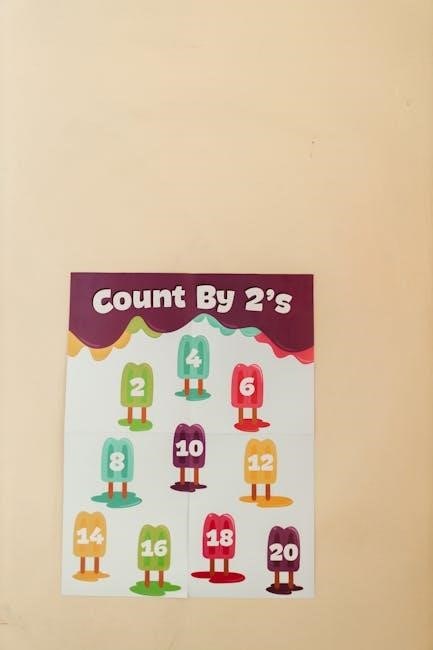
Design worksheets to directly reference the anchor chart, encouraging students to use it as a visual aid during practice․ This connection strengthens learning and promotes independence․
Types of Two-Digit by One-Digit Multiplication Worksheets
A diverse range of worksheets caters to different learning needs․ Basic Practice worksheets focus solely on the standard algorithm, building fluency․ Area Model worksheets visually represent the multiplication process, aiding conceptual understanding․ Partial Products worksheets break down the problem into smaller, manageable steps․
Word Problem worksheets apply multiplication to real-world scenarios, enhancing problem-solving skills․ Error Analysis worksheets present incorrect solutions, prompting students to identify and correct mistakes․ Mixed Review worksheets combine various problem types for comprehensive practice․
Differentiated worksheets offer varying levels of difficulty, supporting all learners․ PDF formats ensure accessibility and easy printing for classroom or home use․
Connecting Worksheets to the Anchor Chart
The anchor chart serves as a constant visual reference while students complete worksheets․ Worksheets should mirror the strategies presented on the chart – standard algorithm, area model, and partial products․ Explicitly reference the chart during worksheet instruction, guiding students to utilize the steps and visual cues․

Worksheet problems can be directly linked to examples displayed on the anchor chart, reinforcing the connection between concept and practice․ Encourage students to refer to the chart when encountering difficulties, promoting independent problem-solving․
Color-coding on worksheets can align with the anchor chart’s color scheme, further strengthening the visual link․ This integrated approach fosters a deeper understanding and retention of two-digit by one-digit multiplication concepts․
Using Worksheets for Assessment
Worksheets provide valuable insights into student understanding of two-digit by one-digit multiplication․ Analyze completed worksheets to identify areas of strength and weakness, pinpointing specific skills needing reinforcement․ Look for patterns in errors – are students consistently struggling with place value, regrouping, or a particular multiplication fact?
Worksheet data informs differentiated instruction․ Students demonstrating mastery can be challenged with more complex problems, while those needing support receive targeted interventions․ Use worksheets as formative assessments to adjust teaching strategies in real-time․
Consider incorporating a variety of worksheet types – problem sets, word problems, and error analysis tasks – to assess different aspects of understanding․ This comprehensive approach ensures a thorough evaluation of student learning․
Finding & Utilizing PDF Anchor Charts
Numerous online resources offer free PDF anchor charts for two-digit by one-digit multiplication․ Websites dedicated to teacher resources, educational blogs, and even platforms like Teachers Pay Teachers frequently host downloadable charts․ Search terms like “multiplication anchor chart PDF” or “two-digit multiplication reference sheet” will yield relevant results․
PDF format offers flexibility – charts can be easily printed in various sizes, projected onto a screen for whole-class instruction, or even digitally annotated for interactive lessons․ Look for charts that clearly illustrate the standard algorithm, area model, and partial products method․
Utilize these charts as visual aids during lessons, referencing them frequently to reinforce key concepts․ Encourage students to use the charts as a self-help tool during independent practice and assessments․
Where to Download Free Anchor Chart PDFs
Several websites provide free, downloadable PDF anchor charts for two-digit by one-digit multiplication․ Teachers Pay Teachers often has free samples and resources created by educators․ Education․com and K5 Learning are excellent sources for printable math charts, including multiplication strategies․ Many educational blogs dedicated to elementary math also offer free anchor charts as lead magnets or freebies․
A quick Google search using keywords like “free multiplication anchor chart PDF” will reveal a wealth of options․ Look for charts aligned with Common Core standards (CCSS), specifically 4․NBT․6․ Websites like Math Geek Mama and The Teacher Studio frequently share free resources․
Remember to preview the chart to ensure it aligns with your teaching style and the specific methods you’re using․
Printing & Displaying the Anchor Chart
Once downloaded, printing the anchor chart is straightforward․ Use a color printer for maximum visual impact, ensuring clarity for students․ Standard letter-size paper (8․5 x 11 inches) works well, but consider larger formats (11 x 17 inches) for prominent classroom display․ Laminating the chart protects it from wear and tear, extending its lifespan․
Strategically position the anchor chart in a highly visible location – near the math center, whiteboard, or student desks․ Consider creating multiple mini-anchor charts for individual student use, placed in math notebooks or folders․ Interactive anchor charts can be displayed with sticky notes for students to add examples or questions․
Ensure the chart is easily accessible during independent practice and small group work, serving as a constant reference point․
Creating Interactive Anchor Charts
Transform static anchor charts into dynamic learning tools! Incorporate lift-the-flap elements to reveal steps in the multiplication process, or use pockets to hold example problems․ Dry-erase anchor charts allow students to directly practice, solving problems and demonstrating understanding․ Interactive notebooks can house smaller, student-created versions, fostering ownership․
Utilize sticky notes for students to add their own examples, questions, or alternative strategies․ QR codes linking to online tutorials or practice worksheets enhance engagement․ Consider a “mistake gallery” section where common errors are analyzed collaboratively․
Digital anchor charts offer even more interactivity, with clickable elements and embedded videos․ These charts can be used as journal entries․
Differentiation & Support
Anchor charts support diverse learners by providing a visual scaffold․ For struggling students, simplify the chart, focusing on one step at a time and providing pre-filled examples․ Use base-ten blocks alongside the chart to concretely represent the multiplication process․ Offer modified worksheets with fewer problems or pre-grouped numbers․
For advanced learners, extend the chart to include multi-step problems or challenge them to create their own anchor chart variations․ Encourage peer tutoring, where students explain concepts to each other using the anchor chart as a guide․ Provide open-ended tasks that require application of multiplication skills in real-world contexts․
Adapt the chart’s color-coding and visual cues to suit different learning styles․
Adapting Anchor Charts for Different Learning Styles
Visual learners benefit from the anchor chart’s inherent visual nature, but enhance it with color-coding, diagrams, and clear step-by-step illustrations․ Kinesthetic learners thrive with interactive anchor charts – those they can manipulate, add to, or use with physical manipulatives like base-ten blocks․ Auditory learners benefit from verbalizing the steps outlined on the chart, explaining the process to a partner, or listening to a teacher’s explanation alongside it․
For logical/mathematical learners, emphasize the ‘why’ behind each step, connecting it to place value and the distributive property․ For social learners, incorporate collaborative activities where students create and use the anchor chart together․ Provide varied worksheet formats – some visually focused, others more abstract – to cater to preferences․
Supporting Struggling Learners with the Anchor Chart
The anchor chart serves as a crucial scaffold for students facing difficulties with two-digit by one-digit multiplication․ Focus on breaking down the standard algorithm into smaller, manageable steps, highlighting each on the chart․ Pair students with peers who demonstrate mastery, encouraging peer tutoring and collaborative problem-solving using the chart as a guide․

Provide simplified worksheets with fewer problems and increased visual cues, directly referencing the anchor chart․ Utilize base-ten blocks alongside the chart to concretely represent the multiplication process․ Offer one-on-one support, walking students through each step while pointing to the corresponding information on the chart․ Regularly revisit the chart during practice sessions to reinforce understanding and build confidence․
Extending the Learning for Advanced Students
For students who quickly grasp two-digit by one-digit multiplication, the anchor chart can be a springboard for more complex challenges․ Introduce multi-step word problems requiring them to identify the appropriate multiplication operation and apply their skills․ Encourage exploration of different strategies, like the area model or partial products, comparing and contrasting their efficiency․
Present problems with larger numbers, transitioning towards three-digit by one-digit multiplication, referencing the core principles on the anchor chart․ Challenge them to create their own multiplication problems and corresponding anchor chart explanations for classmates․ Introduce the concept of estimation to check the reasonableness of their answers․ Explore patterns in multiplication, such as multiples of ten, fostering a deeper understanding of number relationships․
Mastering Two-Digit by One-Digit Multiplication with Anchor Charts
Utilizing anchor charts alongside targeted worksheets proves a powerful combination for solidifying two-digit by one-digit multiplication skills․ The visual reinforcement of the anchor chart, detailing the standard algorithm, area model, and partial products, empowers students with multiple solution pathways․ Free PDF resources readily available online further support classroom implementation and individual practice․
Consistent worksheet integration, linked directly to the anchor chart’s concepts, allows for effective assessment and differentiation․ Interactive anchor chart versions promote student engagement and ownership of their learning․ By providing clear, step-by-step guidance and opportunities for practice, educators can foster confidence and mastery in this fundamental mathematical skill․ Ultimately, anchor charts transform multiplication from an abstract concept into a manageable and achievable task․